
Threads Fillers And Energy Devices In The 2025 Miami Rejuvenation Scene
Educational only. This article does not provide personal medical advice, diagnosis, or treatment. Always consult a qualified clinician who can review your individual situation in person.
Why Threads And Combination Plans Are Everywhere In Miami
Walk into almost any upscale miami skin spa or med spa setting in 2025 and you will hear the same questions over and over again:
“How can I get lift without a facelift?”
“Can I tighten my jawline and neck, but still look like myself?”
“Is a thread face lift really worth it, or should I just stick with fillers and facials in miami?”
Miami has always been ahead of the curve when it comes to medical aesthetics. Patients here are comfortable with injectables, laser treatments and skin care routines that would be considered advanced in other cities. What has changed over the last few years is not just how many people are seeking nonsurgical facial rejuvenation, but how specific they are about wanting lift, contour and skin quality without classic surgery.
That shift is exactly where pdo threads and combination plans come in. Instead of choosing between “just Botox” or a full facelift, patients are increasingly offered layered programs that may include:
- PDO thread lift treatments to reposition and support soft tissue
- Neuromodulators to relax overactive muscles and soften expression lines
- Hyaluronic acid fillers to rebuild lost volume and contour
- Energy based devices such as ultrasound or radiofrequency to tighten deeper support structures and improve skin texture
- Ongoing maintenance with facials in miami, peels and targeted laser care
At the same time, more patients are asking for plans grounded in real data, not just before and after photos on social media. They want to know what PDO threads are actually made of, how long results last, what complication rates look like in large studies, and how threads compare with fillers and surgery over time.
This article walks through that evidence in plain language, and shows how a clinic in Miami might combine pdo threads, fillers and energy devices in a thoughtful, medically supervised way rather than chasing the latest trend.
How Facial Aging Works And Why People Want Nonsurgical Options
To understand why pdo thread lift procedures have become so popular, it helps to start with what is actually changing in the face over time.
Facial aging is not just about wrinkles on the surface. It is a three dimensional process that involves:
- Bone – The bony framework of the midface and jaw remodels with age, reducing projection and support.
- Deep and superficial fat pads – Deep fat pads in the midface and temples deflate and descend, while some superficial pads can become more prominent or shift downward, contributing to heaviness along the nasolabial folds and jawline.
- Ligaments and fascia – The ligaments and connective tissue that suspend facial fat pads relax, letting tissue slide down and inward.
- Skin and collagen – Sun exposure, genetics, hormones and lifestyle slowly thin the dermis, reduce collagen and elastin, and alter the way the skin drapes over the underlying framework.
Traditional facelifts address this primarily by surgically repositioning deeper tissues and removing excess skin. The results can be powerful, but the trade offs are real: anesthesia, incisions, weeks of visible recovery and higher upfront risk and cost.
Many patients in their thirties through sixties are not ready to commit to surgery. They may be early in the aging process, have demanding schedules, or simply prefer to explore stepwise, nonsurgical options first. That is where a spectrum of tools comes in:
- Neuromodulators address dynamic wrinkles caused by muscle movement.
- Fillers and facial fat transfer rebuild volume where bone and fat have been lost.
- PDO threads physically lift and suspend tissues that have descended.
- Energy devices such as high intensity focused ultrasound (HIFU) and radiofrequency target deeper layers to coax collagen remodeling and tightening.
- Facials, peels and lasers refine the surface, treating pigment, redness and fine lines.
Rather than thinking of a “thread face lift” or a filler session as isolated events, serious clinics design comprehensive plans that might eventually include options like facial fat transfer miami for patients who need more structural change, while still starting with minimally invasive steps.
What Are PDO Threads – Materials, Mechanism And Evidence
What PDO threads are made of
PDO stands for polydioxanone, an absorbable suture material that has been used in general surgery, cardiovascular surgery and pediatric procedures for decades. It is designed to be strong enough to hold tissue during healing, then slowly break down into carbon dioxide and water that the body can clear.
In the aesthetic context, PDO sutures are manufactured in specific shapes for facial rejuvenation. They may be:
- Smooth – very fine threads intended primarily for collagen stimulation
- Barbed or cogged – threads with tiny barbs that catch and hold soft tissue when they are pulled in a particular direction
- Molded cones or hooks – variations that aim to distribute tension more evenly
A systematic review comparing absorbable and non absorbable threads for facial lifting found that absorbable materials such as PDO had lower rates of issues like thread extrusion and persistent numbness, while still delivering measurable improvements in contour and patient satisfaction for appropriate candidates. These findings, drawn from multiple clinical series, help explain why most modern thread systems use absorbable materials instead of permanent ones.
How threads are designed to work
In a typical pdo thread lift, a practitioner introduces threads through small entry points using a needle or cannula. The barbs engage in the soft tissue at a chosen depth, often within or near the superficial musculoaponeurotic system (SMAS), and the thread is then gently tightened to reposition lax tissue toward a more youthful position.
Key variables include:
- Thread length and thickness
- Barbs configuration and direction
- Depth of placement (subdermal, within the SMAS, or just above it)
- Vector, or direction of pull, relative to the patient’s anatomy
Studies that used imaging and standardized photography have shown that correct placement and vector choice are critical. When threads are inserted too superficially, they may be visible or palpable. Too deep or in the wrong plane, and they may not create much lift, or could irritate structures they were not intended to contact.
A 2025 randomized comparative trial looked at whether simply adding more PDO threads improved results. Patients were assigned to receive either a standard number of threads or a higher count. When evaluated at 60 days, both groups showed measurable lifting of midface tissues and improved contours, but adding extra threads did not significantly improve sustained lift or patient satisfaction. That finding supports what experienced providers in Miami already see in practice: technique, planning and correct depth matter more than sheer thread count.
What objective data exists on lifting effect
Evidence for PDO thread lifting now includes:
- Blinded photographic assessments in which independent observers score pre and post treatment images
- Objective measurements of facial landmarks and angles
- Patient reported outcome scales that track satisfaction and quality of life changes
Across numerous small to mid sized studies, the pattern is consistent: PDO thread lift procedures can create modest but noticeable improvements in midface and jawline contour for carefully selected patients, especially those with mild to moderate laxity. Lift is often most visible in the first few weeks, with partial softening over several months as gravity, facial movement and tissue remodeling catch up.
Some research describes volumizing threads that are placed in a lattice pattern to stimulate collagen and subtle fullness rather than strong directional lift. This approach may be relevant for early deflation in the midface or lower face when the goal is gentle support instead of dramatic repositioning.
The key takeaway for patients considering pdo thread miami treatments is that threads are best thought of as a structural tool with realistic expectations, not a magic “non surgical facelift.” They work well in the right context and are now supported by multiple clinical trials, but their results have limits.
Safety Profile And Complication Data For Thread Lifting
What large reviews show about risk
Any procedure that uses needles, cannulas and foreign materials carries risk. The question is not whether complications can happen with pdo threads, but how often and how serious they tend to be in real world settings.
A 2021 meta analysis of thread lifting pulled together data from 26 studies and found that the most common issues were:
- Swelling
- Skin dimpling or puckering
- Temporary changes in sensation (paresthesia)
- Minor thread visibility or palpability
- Local infection in a small percentage of cases
In that analysis, absorbable threads such as PDO showed lower rates of thread extrusion and persistent numbness than non absorbable options. Later reviews and a 2025 meta analysis that included over 14,000 patients reached similar conclusions: most adverse events are mild and short lived, and serious events are rare when procedures are performed by trained medical professionals with appropriate technique and aftercare.
More recently, a multicenter review of over 110,000 facial thread cases gave an even clearer real world picture. While minor asymmetry, swelling and bruising were not uncommon, serious complications remained uncommon relative to the total number of procedures performed.
Serious but less common complications
Though infrequent, more serious events have been documented and should be part of any honest consent process. Published case reports and complication series describe:
- Persistent dimpling or contour irregularities that require thread adjustment or removal
- Localized infections or abscesses along the thread path
- Irritation of sensory nerves causing prolonged discomfort or altered sensation
- Thread migration into nearby structures, including the parotid gland, requiring imaging and potential surgical management
A 2025 paper on facial thread lifting complications highlighted how ultrasound imaging can help identify misplaced threads, parotid gland injury and localized reactions. By visualizing the exact position of the threads and surrounding tissues, clinicians can often address issues earlier and more precisely than with clinical examination alone.
Regulatory status and knowledge gaps
It is important to understand how regulators view these devices. In many markets, PDO threads are cleared as medical sutures for soft tissue approximation rather than explicitly for midface wrinkle reduction or lifting. That means that while the materials themselves are approved, the specific “thread lift” applications are often considered off label — a common situation in aesthetic medicine, but one that should be discussed openly.
Systematic reviews and position statements published in 2024 and 2025 emphasize that:
- Long term randomized controlled trials comparing PDO thread lift results with other nonsurgical options are still limited
- Results vary by technique, patient selection and device type
- Patient expectations need to be carefully managed, especially when marketing language promises “non surgical facelifts”
For anyone considering pdo threads or a thread face lift style procedure, this context matters. It does not mean threads are unsafe or ineffective, but that they should be approached as one evidence informed tool among many, not as a guaranteed replacement for surgical lifting.
How Neuromodulators And Fillers Support Thread Lift Results
Neuromodulators for muscle balance
Thread lifting works on the position of tissues. Neuromodulators such as botulinum toxin type A work on muscle activity. In practice, they often support each other.
Botulinum toxin A has been studied extensively in randomized, placebo controlled trials for frown lines, crow’s feet and forehead lines. These studies consistently show:
- Statistically significant reductions in wrinkle severity scores compared with placebo
- High rates of patient and physician reported satisfaction
- Typical duration of effect around three to four months for most cosmetic indications
By relaxing specific muscles, neuromodulators reduce the repetitive folding of skin that creates and deepens dynamic lines. When used alongside pdo thread lift procedures, neuromodulators can:
- Reduce downward pull from depressor muscles that counteract the upward lift of threads
- Soften overactive chin or jaw muscles that create dimpling or heaviness in the lower face
- Allow threads to maintain their vectors with less opposition in the early healing phase
This is one reason many advanced thread protocols include neuromodulator treatment either shortly before or after thread placement.
Hyaluronic acid fillers and facial fat transfer
Where threads reposition, fillers replace volume. Hyaluronic acid fillers are gels that attract water and occupy space in a controlled way. Clinical studies using three dimensional imaging show that:
- Fillers placed in deep midface compartments increase projection and soft tissue support immediately after injection
- Volume tends to remain improved for six to twelve months, depending on product, depth and individual metabolism
- Layered treatment that combines deep structural filler with more superficial filler for lines and folds tends to create the most natural results
For some patients, especially those with significant volume loss or weight related deflation, injectable fillers alone may not be enough. That is where facial fat transfer enters the rejuvenation conversation. In this surgical procedure, a surgeon harvests the patient’s own fat from an area like the abdomen or thighs, processes it, and injects it strategically into the face.
Recent plastic surgery trend reports show that facial fat transfer procedures have increased in frequency, particularly in patients who have lost weight or have medication related deflation. For Miami patients willing to consider minimally invasive surgery, facial fat transfer miami can be positioned as a longer term way to restore soft, natural volume, sometimes in combination with PDO threads and energy devices.
Evidence For Combination Plans – Threads, Fillers, Toxin And Energy Devices
Patients rarely age in a single dimension, so it makes sense that the most effective nonsurgical plans rarely rely on a single modality. Over the last decade, evidence has been accumulating for combination approaches.
Threads plus fillers
A number of prospective studies and observational series have evaluated outcomes when PDO threads are used alongside hyaluronic acid fillers. Common patterns include:
- Threads are placed first to reposition tissue and set the basic contour.
- Fillers are added in deeper compartments to support the new position and in more superficial planes to smooth remaining shadows or folds.
- Follow ups at six to twenty four months show improvement in midface projection, nasolabial fold depth and jawline contour compared with baseline, with many patients maintaining visible benefit beyond the typical timeline of threads alone.
One study focused on midface rejuvenation in Asian patients using a combination of thread lift, high intensity focused ultrasound and fillers. While the protocol differed from Western practices, it demonstrated that layered treatment can achieve synergistic improvements in both lift and skin quality.
Threads plus neuromodulators
Other clinical work has explored combining PDO threads with neuromodulators. In one 2025 trial, patients received barbed threads for mid and lower face along with botulinum toxin A in key muscles. Assessments over several months suggested:
- Greater improvement in wrinkle scores and perceived youthfulness than with threads alone
- High satisfaction rates, with most side effects limited to expected swelling and bruising
- No significant increase in serious complications when treatments were performed in a controlled, medical setting
These findings match what many experienced injectors in Miami already observe: well timed neuromodulator dosing can make thread work look more polished and may help results last longer by reducing mechanical stress on new support vectors.
Threads plus high intensity focused ultrasound and radiofrequency
Energy based devices such as HIFU and radiofrequency do something different again: they focus energy at specific depths to induce controlled thermal injury and, over time, collagen remodeling and tightening. Three dimensional imaging studies of HIFU alone have shown measurable lifting in multiple facial zones.
When combined with threads, early studies report:
- Better improvements in facial laxity and contour than with energy alone for some patient groups
- Sustained effects in a portion of participants after three sessions of combined therapy
- Acceptable safety when protocols respect tissue tolerance and allow recovery time
For example, a 2025 retrospective study evaluated 58 participants who received combined thread lift therapy and HIFU for mid and lower face. Over multiple sessions, the combination maintained or enhanced lift for many patients without introducing new categories of complications beyond those already known for each modality.
These kinds of data support what advanced franco aesthetic style practices and miami skin spa clinics are already doing: designing customized, staged treatments that use threads, fillers, toxin and energy devices in a coordinated way rather than as one off procedures.
AI Guided Ultrasound And Imaging For Safer, More Precise
Thread Lifts
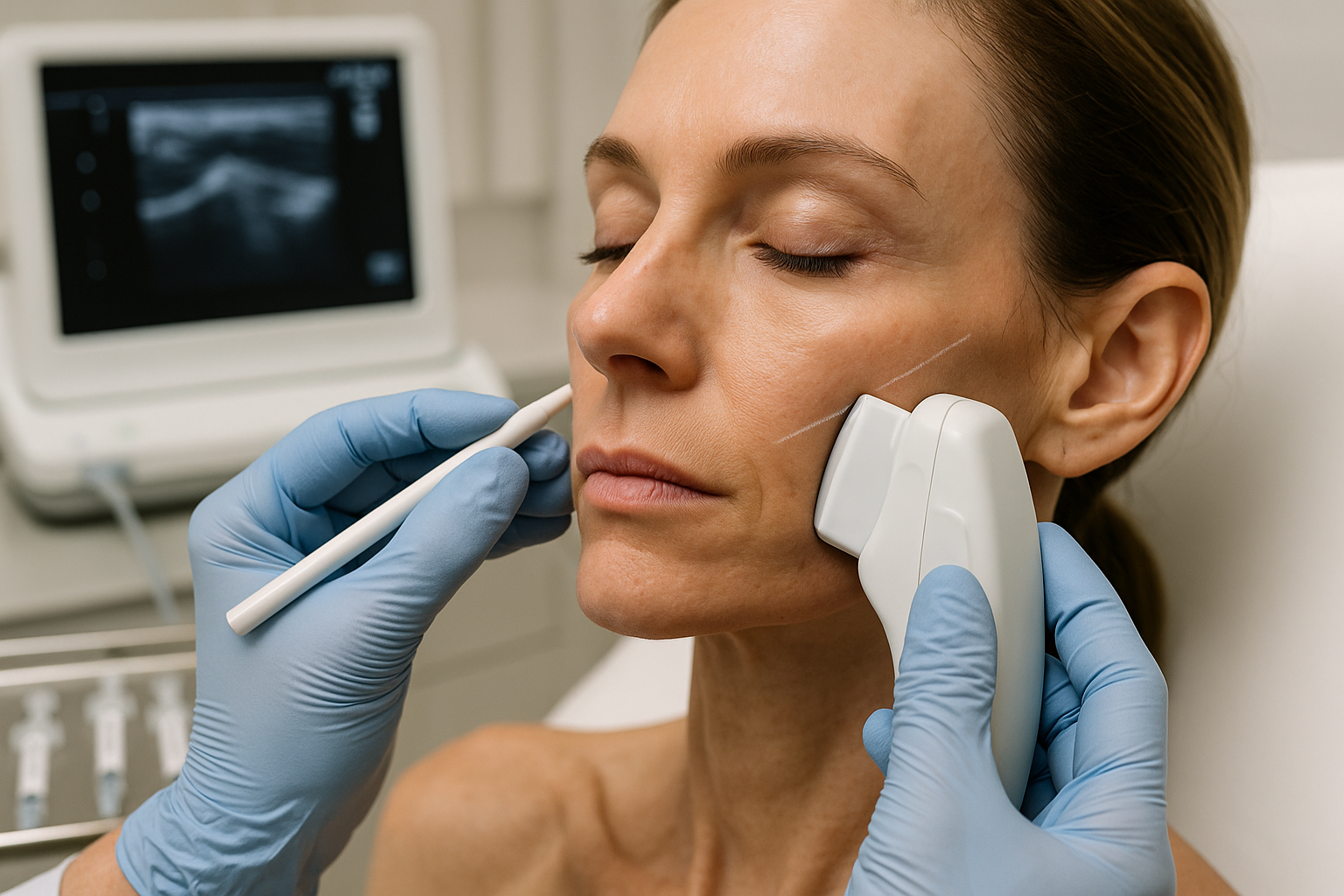
Ultrasound has quietly become one of the most important safety tools in modern medical aesthetics. High frequency facial ultrasound allows clinicians to visualize:
- Superficial and deep fat compartments
- Key retaining ligaments
- Major blood vessels
- Previously placed fillers or threads
For PDO threads, this means providers can confirm depth and vector, avoid critical structures and evaluate any areas of concern after treatment.
In 2025, a real world study evaluated 246 patients who underwent facial thread lifting with Aptos PLLA/PCL threads under AI guided high frequency ultrasound, sometimes combined with energy based treatments such as focused ultrasound, radiofrequency or CO₂ laser on the same day. The researchers reported low rates of complications over 180 days and emphasized that AI assisted ultrasound helped standardize thread placement within the desired tissue layer.
Separate work on integrating facial ultrasound into aesthetic practice has shown how imaging can:
- Detect nodules, granulomas or misplaced product
- Map out safe corridors for future injections or thread placements
- Help clinicians manage complications more confidently rather than relying on guesswork
For patients seeking pdo thread miami–style treatments, asking whether a clinic uses ultrasound routinely is now a reasonable part of the safety conversation. AI assisted ultrasound does not replace skill, but it can add another layer of precision and protection, especially in areas near nerves, glands or major vessels.
Designing A Layered Rejuvenation Plan At A Clinic Like CMA Miami
Assessment and mapping
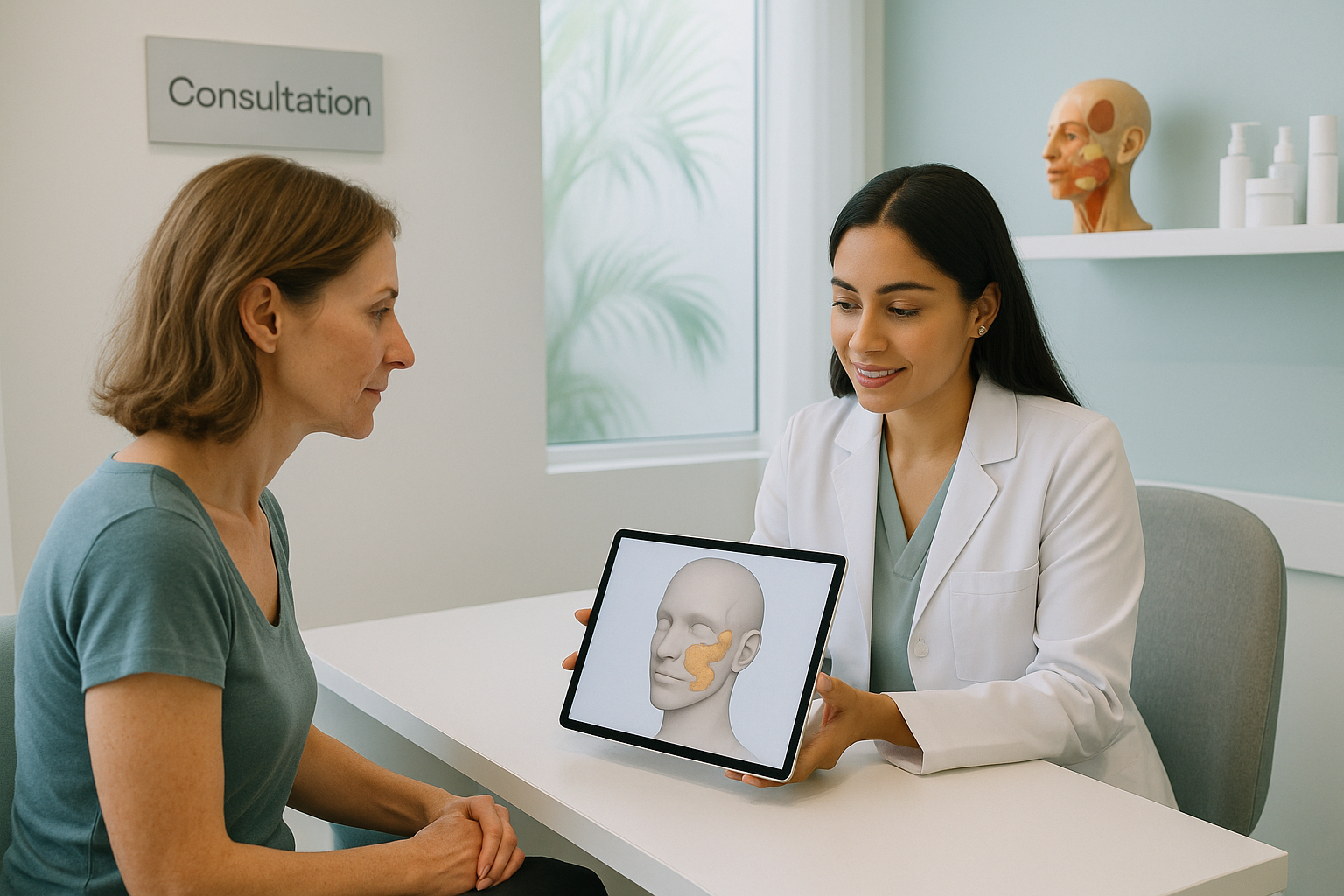
In a physician led clinic that offers comprehensive medical aesthetics, a typical consultation for nonsurgical facial rejuvenation is more than a quick look in the mirror.
A thorough assessment often includes:
- Standardized photographs from multiple angles and, in some practices, three dimensional imaging
- Review of medical history, medications, previous aesthetic treatments and long term goals
- Evaluation of skin type, sun exposure history, pigmentation and redness
- Mapping of volume loss, dynamic wrinkles and early sagging
In a coastal city like Miami, sun exposure and rosacea are common, so facials in miami, medical grade peels and lasers for redness often become part of the conversation. When patients are asking about rosacea laser treatment cost, the clinician’s job is to place that in context: a laser that helps redness may not do much for laxity, and vice versa, so treatment planning has to look at the whole face and all layers.
Building the plan
Once the anatomy and priorities are clear, a layered plan may include:
- PDO threads to lift and support specific zones, such as the midface, jawline or brows. The number and pattern of threads is decided based on tissue thickness, laxity and vector needs, not just a marketing package.
- Neuromodulators to soften expression lines and reduce muscle pulls that would fight against the direction of the threads.
- Fillers or
facial fat transfer to restore volume in areas where structural support alone is not enough – cheeks, temples, chin or jawline. For larger deficits, discussion may include whether facial fat transfer miami is a better long term choice than repeated filler sessions.
- Energy devices like HIFU or radiofrequency microneedling for deeper tightening and dermal remodeling, often staged between thread or filler sessions.
- Skin quality work using tailored facials, chemical peels, pigment lasers and home care to improve tone, texture and luminosity so the underlying lift really shows.
A miami skin spa or franco aesthetic style practice that is truly medically supervised will also talk about sequence and timing. Sometimes threads come first, followed by fillers. In other cases, it makes sense to restore volume before adding more lift. Energy based treatments may be scheduled before or after threads depending on the device and the area.
What matters most is that each tool has a clear job, and that the plan is customized. No two faces – and no two aging patterns – are exactly the same.
Recovery, Durability And How Thread Plans Compare With Surgical Lifts
Recovery with threads and combination plans
One of the main reasons people choose PDO thread and energy based programs is the shorter recovery compared with surgery. Typical thread lift aftercare includes:
- Mild to moderate swelling and bruising for a few days to a week
- A sensation of tightness or pulling along the vectors, especially when smiling or chewing, that usually eases as tissues settle
- Recommendations to avoid heavy exercise, facial massage, dental procedures and wide mouth movements for a short period
When threads are combined with fillers, neuromodulators or HIFU, each modality adds its own recovery profile, but for most patients, social downtime is still measured in days rather than weeks.
Durability of results
How long do thread lifts last? The honest answer is: it depends.
Studies suggest that:
- The most visible mechanical lift is often seen in the first one to three months.
- As PDO threads dissolve over about six to nine months, some of the initial lift softens.
- Collagen stimulation and subtle tissue thickening may provide more gradual, longer lasting support beyond the lifespan of the thread itself.
- Combination plans that include fillers or energy devices tend to maintain visible improvement longer than threads alone, because volume and collagen changes remain after the thread has gone.
Patient factors – age, skin quality, degree of laxity, lifestyle and expectations – have a huge influence as well. Someone in their late thirties with mild laxity and good skin may notice a positive change for a year or more, while someone with advanced laxity may see earlier regression and may ultimately be better served by surgery.
Comparison with surgical lifts
Surgical facelifts still offer:
- Greater ability to reposition deeper tissues and remove skin
- More dramatic improvements in certain types of neck and jawline laxity
- Longer lasting results, often measured in many years rather than months
What threads and combination nonsurgical plans offer is not a one to one replacement, but an alternative pathway:
- For younger patients who are not yet surgical candidates
- For those who want to “preview” changes or delay surgery
- For individuals who accept a more modest improvement in exchange for lower downtime and risk
A thoughtful clinic will be transparent about this. If you meet with a provider in Miami and the promised outcomes of a pdo thread lift sound identical to those of a full facelift, that is a red flag. Realistic, evidence based counseling should highlight the strengths and limits of each option.
Questions Patients Should Ask And How To Use This Information
Threads, fillers and energy devices are powerful tools when used well. They also carry risk when used casually or by undertrained providers. If you are considering pdo thread miami or any kind of thread face lift style procedure, it helps to walk in with a clear checklist.
You might ask:
- Training and experience – How many PDO thread lift procedures do you perform each month? What specific devices or brands do you use, and why?
- Safety tools – Do you use ultrasound guidance routinely for threads or fillers? How does that change your approach?
- Plan design – How do you decide when to use fillers versus threads, or when to consider facial fat transfer? Will you be layering treatments over time, or doing everything at once?
- Managing complications – What is your protocol if there is dimpling, asymmetry, infection or nerve irritation? Who manages those problems, and how quickly can I be seen?
- Long term thinking – How will these treatments affect my options if I later decide on surgery? What is your philosophy on combining nonsurgical options and surgical care?
Most importantly, remember that this article is meant to inform, not to diagnose or recommend specific procedures. Your face, health history and goals are unique. A physician led clinic that offers comprehensive medical aesthetics in Miami should take time to examine you in person, listen to your priorities and design a plan that fits your anatomy and your life.
Used thoughtfully, PDO threads, fillers and energy devices can work together to soften the pull of time without erasing the character in your face. The goal is not to chase every trend, but to use data, experience and judgment to keep you looking like yourself – rested, confident and very much at home in your own skin.
References And Sources
The information in this article was informed by peer reviewed research, systematic reviews and clinical studies from reputable journals and organizations, including but not limited to:
- Meta analyses and systematic reviews of thread lifting materials and complications, comparing absorbable PDO threads with non absorbable options and reporting pooled complication rates such as swelling, dimpling, paresthesia, infection and extrusion.ResearchGate
- Large real world reviews and multicenter analyses of PDO thread lift outcomes and patient satisfaction, including data on more than 1,500 to over 110,000 facial thread cases. ResearchGate
- Randomized and comparative clinical trials evaluating tissue displacement, volume change and satisfaction after PDO thread lift, including studies on thread count and design. ResearchGate
- Clinical research on combination protocols using thread lift plus high intensity focused ultrasound and other energy based devices for facial aging, with three dimensional analysis of lifting effects and durability. Omics Online Publishing
- Safety studies and real world cohorts on AI guided high frequency ultrasound for thread placement and concurrent energy based treatments, highlighting low complication rates and improved localization of threads and structures. Global Ultrasound Institute
These sources, along with current consensus statements and expert reviews from dermatology and plastic surgery literature, were used to shape the discussion of mechanisms, benefits, risks and realistic expectations for PDO threads and combination nonsurgical facial rejuvenation in 2025.