
From Ozempic Face To Balanced Features
How Miami Patients Use Botox And Fillers To Rebuild Volume
Educational only. This article does not provide personal medical advice, diagnosis, or treatment. Always discuss your own situation with a qualified clinician.
Why “Ozempic face” is suddenly everywhere – especially in Miami
If you live in South Florida, you have probably heard the phrase “Ozempic face” in conversations at the gym, on social media, or even in the waiting room of a med spa Miami patients frequent. The term usually refers to a certain look that can follow rapid weight loss on GLP-1 medications like semaglutide and tirzepatide: hollow cheeks, sharper lines around the mouth, looser neck skin, and a more tired or gaunt expression.
“Ozempic face” is not an official diagnosis. Plastic surgeons and endocrinologists simply recognize it as a familiar side effect of fast, significant weight loss that has suddenly become more common because GLP-1 medicines can help people lose more weight, more quickly, than many older approaches. Large trials of semaglutide for obesity show average weight loss of around 10 to 15 percent of body weight, with some patients losing considerably more over several years.
Miami sits at the intersection of two strong trends: advanced medical aesthetics and GLP-1–assisted weight loss. Many people here work hard on their health, fitness, and appearance. When the body changes quickly but the face looks suddenly older or deflated, it can feel like an unfair trade off. That is where medical aesthetics and comprehensive medical aesthetics plans come in.
In this article we will look at:
- What “Ozempic face” really is and what current research says about it
- How GLP-1–related weight loss changes facial fat pads, muscle, and skin
- Why many patients turn to miami botox, Juvederm dermal fillers, and sometimes fat transfer instead of jumping straight to surgery
- The science behind neuromodulators and fillers for rebuilding balance
- How a serious clinic, such as a physician led med spa miami practice, can design natural looking, layered treatment plans
- The real risks, safety measures, and key questions to ask before you consider treatment
Throughout, we will draw on peer reviewed studies, specialty society data, and major medical organizations, not random blogs, so you can connect the headlines to real evidence.
What is “Ozempic face” and how common is it?
“Ozempic face” is a casual phrase the public uses to describe facial changes after significant weight loss on GLP-1 receptor agonist medications. These drugs, originally developed for type 2 diabetes, lower appetite, slow stomach emptying, and help many people lose substantial amounts of weight.
A 2025 systematic review in a plastic surgery journal pulled together published reports on GLP-1–related facial changes and media trends. The authors described a characteristic pattern: loss of volume in the temples and midface, more visible nasolabial folds and marionette lines, and increased lower-face and neck laxity compared with the person’s age.
The American Academy of Facial Plastic and Reconstructive Surgery (AAFPRS) has been tracking this trend as well. In a survey highlighted by the academy, about 60 percent of facial plastic surgeons reported seeing more patients concerned about “Ozempic face” in 2023. They also noted a jump in requests for volume restoring procedures like facial fat grafting and dermal fillers, rather than purely surgical lifts.
Search data tells a similar story. A 2025 analysis of Google trends found that worldwide search activity for “Ozempic face” and related terms rose sharply between 2022 and 2025, and that interest in “filler” keywords increased in parallel, while interest in many surgical terms stayed relatively flat.
Put simply: more people are using GLP-1 medications, more are achieving big weight loss goals, and more are noticing that their face looks older than they expected. That is why terms like medical aesthetics near me and miami aesthetic bring up so many results linked to Ozempic face treatment — especially in appearance focused cities such as Miami.
How GLP-1–driven weight loss changes facial structure
To understand why these facial changes happen, it helps to look at what GLP-1 medications do to fat and body composition in general.
Large clinical trials and imaging studies show that GLP-1 receptor agonists reduce fat mass more than lean mass overall, but both can be affected. A 2024 body composition analysis found that patients on a GLP-1–based agonist experienced greater reductions in body fat mass and subcutaneous fat than those on lifestyle changes alone, along with some loss of lean mass. Another trial of semaglutide in people with obesity demonstrated sustained, clinically meaningful weight loss over four years, with ongoing improvements in waist circumference and other fat-related measures.
While those numbers are good news for cardiometabolic risk, they can be tough on the face. Facial anatomy is built on a framework of deep and superficial fat pads, ligaments, muscles, and bone. Ageing already tends to decrease deep fat and bone support while increasing certain superficial fat compartments and loosening ligaments.
When someone loses a large amount of weight quickly, especially from medications that strongly reduce appetite, several things can happen at once:
- Deep fat pads in the midface and temples shrink, flattening natural curves
- The skin envelope, already less elastic with age and sun exposure, does not fully “snap back”
- Reduced fat under the eyes and along the jawline can make vessels and bony contours more visible
- In some patients, muscle and connective tissue changes associated with rapid weight loss may further reduce structural support
People in their twenties and thirties can experience Ozempic face changes as well, according to dermatology case reports, which is part of what makes this different from classic ageing. A younger person may have smooth skin and good collagen, but once the deep fat is gone, their cheeks can look hollow and their lower face heavier, creating a disconnect between how they feel and what they see in the mirror.
For Miami patients who have worked hard to improve their health with GLP-1s, this can feel discouraging. The goal is not to reverse the medical benefits of weight loss, but to use tools like miami botox and juvederm dermal fillers to help the face look as healthy as the rest of the body.
Why many patients choose injectables before surgery
When someone notices Ozempic face changes, they often start by exploring non-surgical options at a med spa miami clinic before considering a full facelift. That instinct is supported by what facial plastic surgeons are reporting.
The AAFPRS 2024 trends survey noted that GLP-1 medications are “significantly transforming” facial plastic surgery, and that more patients are seeking volume restoration (fillers, fat grafting) and skin tightening treatments to address deflation and sagging after weight loss. While surgical lifts are still very much part of the toolbox, many patients and surgeons prefer to start with injectables for several reasons:
- Shorter recovery – Most Botox and filler treatments allow people to return to daily activities within a day or two, with only mild swelling or bruising.
- Gradual, adjustable results – Rather than committing to a permanent change, patients can add volume and refine contours over several sessions, seeing how their face responds at each step.
- Timing with weight stability – Because GLP-1–related weight loss can continue for many months, some surgeons recommend waiting until weight stabilizes before major surgery. Injectables offer a way to bridge that period without overcorrecting.
Of course, there are limits. In cases of very significant skin excess or severe neck laxity, surgical lifting and skin removal may be the only way to achieve the patient’s goals. But for many Miami aesthetic patients with mild to moderate Ozempic face changes, careful use of juvederm dermal fillers and neuromodulators can restore a younger, healthier look without the downtime of surgery.
How Botox fits into the Ozempic face story
Botox is a brand name for onabotulinumtoxinA, one of several botulinum toxin type A formulations used in cosmetic medicine. These medicines work by temporarily blocking nerve signals to targeted muscles, softening dynamic wrinkles — lines that appear with movement — rather than filling hollow areas.
Randomized, placebo controlled trials have consistently shown that botulinum toxin type A reduces crow’s feet and frown line severity more than placebo, with visible effects starting within about three to seven days and lasting three to four months for most patients.
In the context of Ozempic face, Botox plays a supporting role:
- When volume disappears from the midface, the pull of muscles around the mouth and eyes can become more obvious, deepening folds and giving the impression of strain.
- Relaxing overactive muscles in the forehead, glabella, and crow’s feet area can soften expressions so the restored volume looks natural, not tense.
- In the lower face, carefully placed doses can reduce excessive chin dimpling or downturned mouth corners, which sometimes become more noticeable after weight loss.
Safety data for cosmetic doses of botulinum toxin type A is reassuring when products are authentic and injectors are trained. Long term follow-up studies and post-marketing surveillance show that most side effects are mild and temporary — bruising, headache, small areas of unintended weakness — with serious events being very rare in the aesthetic setting.
What has raised concern recently is not Botox itself, but counterfeit or improperly compounded products being used outside of regulated clinics. In several incidents reported in the medical literature and news, people received unapproved toxin products and developed generalized weakness and hospital level complications. This is one reason why seeking botox treatment in miami from a physician led medical spa miami practice that sources medications through legitimate pharmaceutical channels is essential.
Botox is not a replacement for volume. Instead, in a comprehensive medical aesthetics plan, it is one tool for restoring balance — controlling expression while fillers rebuild structure.
How hyaluronic acid fillers rebuild volume and contours
Hyaluronic acid (HA) fillers are the main injectable workhorse for Ozempic face concerns. Products in the Juvederm family and similar brands consist of crosslinked HA gels that attract and hold water, allowing injectors to restore volume and smooth creases by placing the gel in specific facial planes.
Modern HA fillers differ in elasticity, cohesivity, and firmness, properties that determine whether a product is better for deep structural support (for example, lifting cheekbones) or for softening fine lines near the surface. Reviews of the “state of the science” in injectable safety emphasize that good outcomes depend not only on the product but on detailed knowledge of anatomy, injection depth, and technique.
Imaging studies using three dimensional photography and MRI have documented how HA fillers add measurable volume to key facial compartments and how that volume changes over time. These studies generally show:
- Immediate increases in projected cheek and midface volume after treatment
- Gradual softening and integration of the filler over several weeks
- Persisting but declining volume at six to twelve months, depending on product and placement
Although dedicated trials on “Ozempic face” and fillers are still limited, plastic surgery case series and aesthetic medicine reports describe consistent strategies:
- Use firmer HA products deeply in the midface, along the cheekbone and in the piriform fossa, to rebuild the “scaffolding” that holds the face up
- Place softer products in the nasolabial folds, marionette lines, and pre-jowl area to soften shadows without distorting movement
- Consider temple, chin, and jawline contouring when GLP-1–related weight loss has made bone contours sharper or more uneven
For very large deficits, especially in the cheeks or buttocks, some surgeons turn to fat transfer — harvesting a patient’s own fat with liposuction, processing it, and reinjecting it into areas that need volume. Recent statistics from a major health system and national societies show a notable rise in facial fat grafting procedures in the GLP-1 era, likely tied to this need for “re-inflation” after deflation.
From a Miami patient’s standpoint, the key point is that juvederm dermal fillers and related products are versatile. In qualified hands, they can help transform a hollow, tired midface into one that looks rested and youthful, while preserving the sharper jawline many patients are happy to keep after weight loss.
How a clinic like CMA Miami plans a combination treatment route
A serious, physician led med spa miami practice will not just “chase lines” with syringes. Instead, planning for Ozempic face is more like architectural work than patching cracks.
Step 1: Comprehensive evaluation
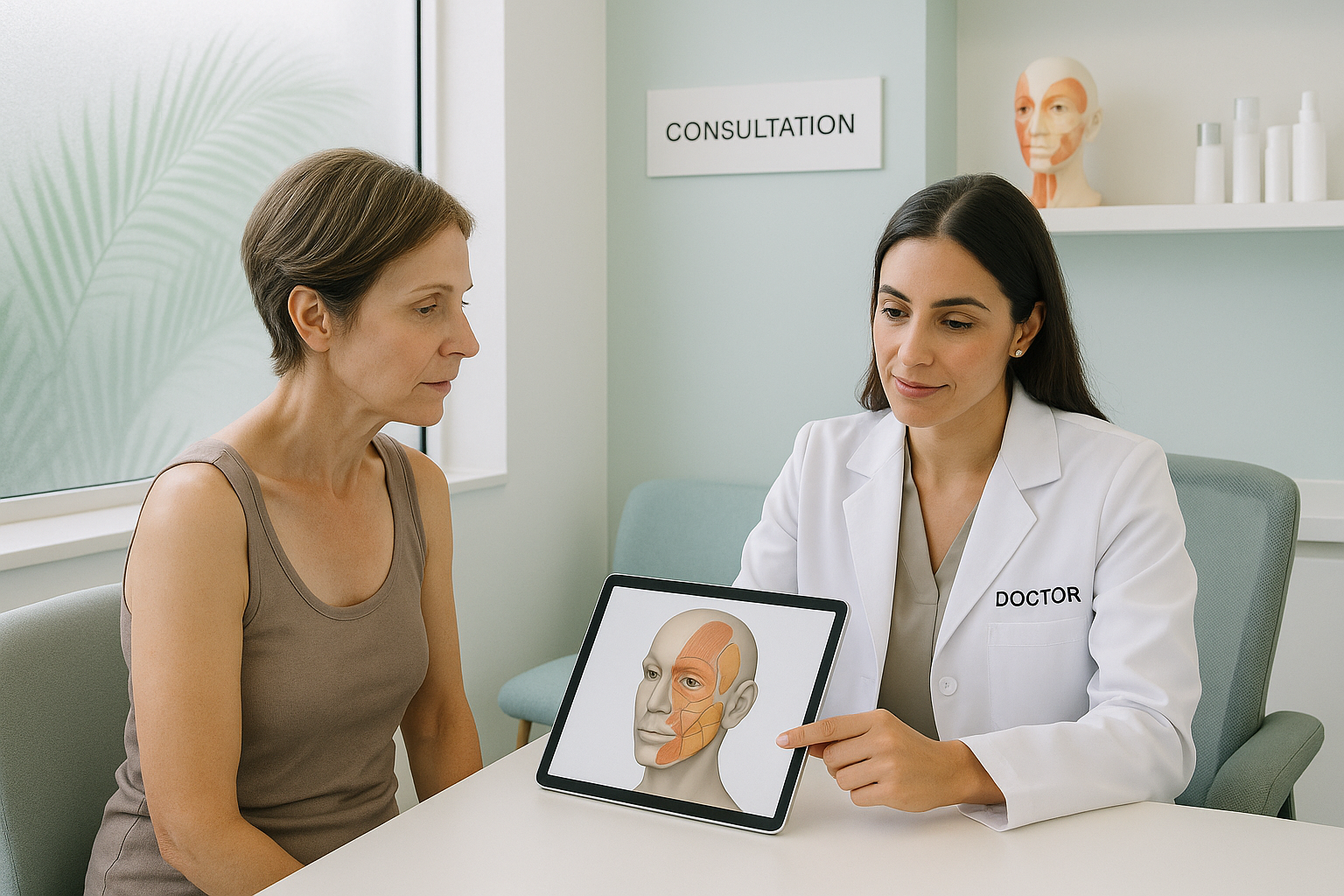
A typical consultation in a clinic like CMA Miami might include:
- A detailed medical history, including GLP-1 use, other medications, weight loss timeline, and any endocrine or cardiovascular conditions
- Standardized photographs and, in some practices, three dimensional imaging to document facial shape from multiple angles
- Assessment of skin quality, sun damage, and elasticity
- Mapping of volume loss in key fat compartments: temples, cheeks, under-eye area, nasolabial folds, marionette region, jawline, and neck
Surgeons and aesthetic physicians now have published maps of how GLP-1–associated weight loss tends to affect the face, helping them anticipate where structure has changed even before the patient can articulate it.
Step 2: Layered treatment design
Once the anatomy is clear, the plan usually layers several tools rather than relying on just one:
- Deep structural filler – Firmer HA or biostimulatory fillers placed along the cheekbones, in the lateral midface, and sometimes in the temples to recreate youthful support
- Contour and refinement – Softer fillers near folds and hollows, with careful attention not to overfill the central face
- miami botox – Targeted neuromodulator injections for crow’s feet, frown lines, forehead lines, and selected areas of the lower face where muscle pull has become more visible after fat loss
- Skin quality treatments – Depending on the clinic, this may include energy based treatments, medical grade skincare, or resurfacing to address texture and tone so that new volume sits under healthy skin
For some patients, mobile botox or mobile medical aesthetics services can be used for follow up touch-ups once the main work has been done in a fully equipped office, maintaining continuity of care while adding convenience.
Step 3: Phasing and restraint
In an evidence based, comprehensive medical aesthetics approach, restraint is as important as capability:
- Providers may start with fewer syringes than the final estimated “need,” allow integration and swelling to settle, then reassess at four to six weeks
- Patients who are still losing weight on GLP-1 therapy may be encouraged to stabilize before undergoing very large volume filler sessions, even if small, strategic treatments are used in the meantime
- The goal is not to erase every hollow, but to restore proportion so that the patient still looks like themselves — usually a top priority for Miami patients who are wary of an overfilled look
This style of planning is where the value of seeing an experienced medical aesthetics team really shows, rather than treating injectables as quick, isolated fixes.
Safety, risks, and how serious clinics lower those risks
No discussion of injectables for Ozempic face would be honest without talking about complications. Botox and fillers are widely used and generally safe in trained hands, but they are still medical treatments with real risks.
Botox safety profile
Cosmetic doses of botulinum toxin type A have been studied for decades. Across randomized trials and long term follow up, the most common adverse effects are minor: bruising, localized pain, temporary headache, and short lived weakness in nearby muscles. Serious systemic reactions are exceedingly rare in the aesthetic setting when approved products and proper dosing are used.
Key risk reduction strategies include:
- Using approved formulations at recommended doses
- Injecting at anatomically safe points and depths
- Avoiding treatment when there are active infections at the injection site or certain neuromuscular conditions
Filler complications and the role of ultrasound
Hyaluronic acid fillers have an excellent overall safety record, but they are not risk free. Reviews of complication patterns highlight:
- Early, usually mild issues: swelling, bruising, lumps, overcorrection or undercorrection, transient itching
- Delayed issues: nodules, product migration, inflammatory reactions
- Rare but serious events: vascular occlusion (filler entering and blocking a blood vessel), which can cause skin loss or, in very rare cases, vision loss if vessels around the eye are involved
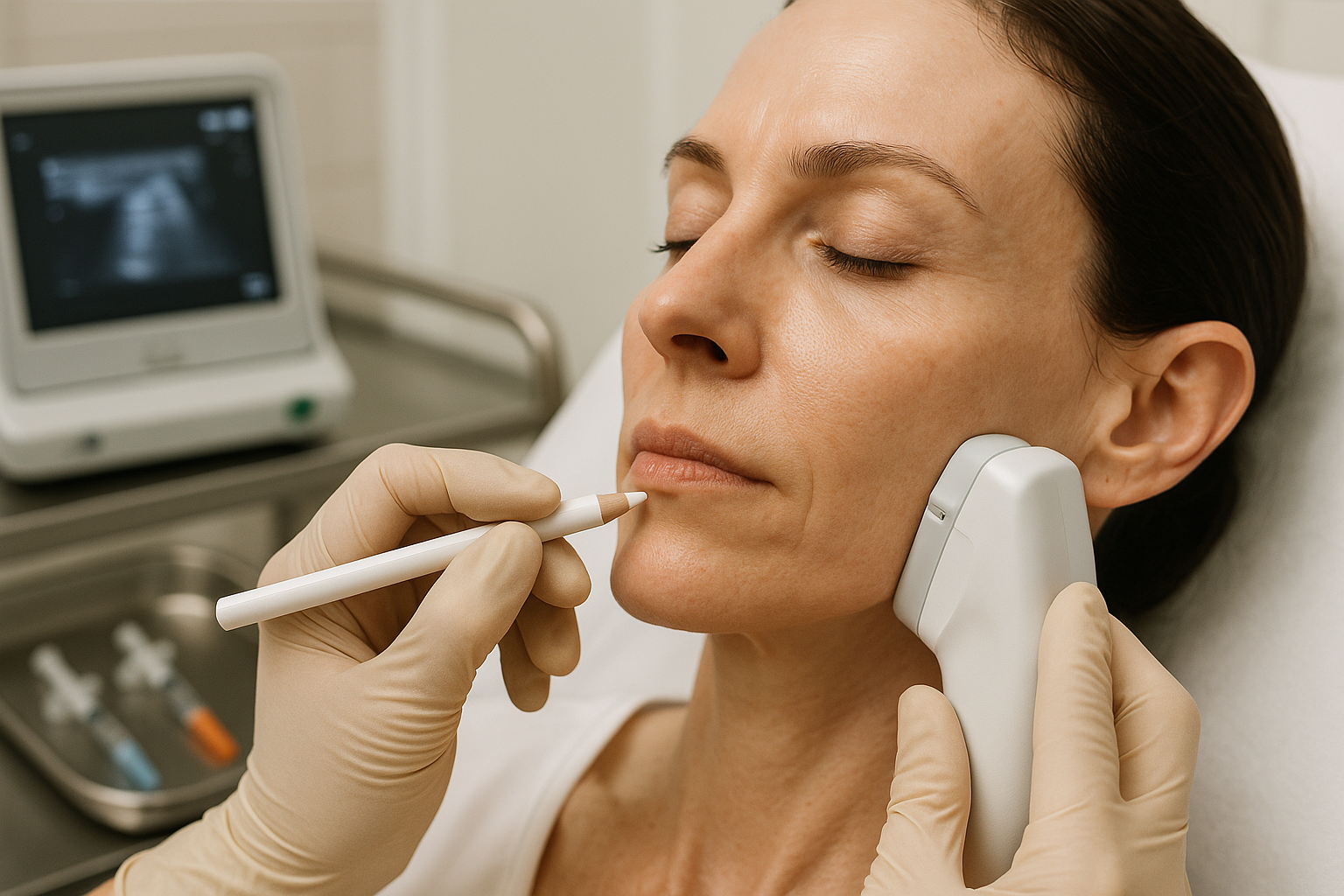
Because GLP-1–related volume loss often pushes treatment toward deeper compartments and areas with complex blood supply, many experts now recommend integrating ultrasound guidance into filler practice. High frequency facial ultrasound can:
- Map major vessels before injection
- Confirm where filler has been placed
- Help identify and treat suspected complications more accurately with hyaluronidase
Recent reviews in aesthetic dermatology and best practice statements emphasize that ultrasound significantly improves injection accuracy and may reduce the risk of vascular occlusion.
A 2025 review of emergency room cases of filler induced vascular occlusion similarly stressed the value of prompt recognition, ready access to hyaluronidase, and coordination with ophthalmology when the eye is involved.
Special considerations for GLP-1 patients
For people using GLP-1 medications, clinicians also need to consider:
- Overall health – Many patients take GLP-1s because of diabetes, hypertension, or cardiovascular risk. A thorough medical review is essential before adding elective aesthetic procedures.
- Nutritional status and muscle mass – Emerging evidence suggests GLP-1s can reduce muscle mass, especially in older or frail individuals. That may influence recovery and long term skin support.
- Timing – Weight may still be changing. Many experts advise focusing on conservative, staged treatments until weight has plateaued, particularly before surgery.
In a responsible med spa miami fl setting, those factors are part of the intake process, not afterthoughts.
Setting expectations and preparing for a consultation
If you are reading this after looking in the mirror and recognizing some of these signs, you are not alone. Ozempic face is real in the sense that rapid, medication driven weight loss can change facial structure in ways that are visible and sometimes emotionally jarring.
The good news is that:
- The mechanisms behind these changes are being studied in real time, giving clinicians better maps and strategies every year.
- Botox and
fillers have robust evidence for softening dynamic wrinkles and restoring lost volume when used thoughtfully.
At the same time, no treatment — injectable or surgical — can completely turn back the clock or guarantee a specific result. A high quality medical aesthetic plan focuses on:
- Aligning your appearance with how healthy and confident you feel after weight loss
- Preserving your individuality rather than copying someone else’s face
- Balancing benefits and risks with your health history and long term goals
Before you meet with a provider, it can help to prepare a list of questions, such as:
- What is your training and experience with Ozempic face and GLP-1–related volume loss?
- Which products do you use for miami botox and juvederm dermal fillers, and why?
- How many sessions do you anticipate, and how will you decide when to stop?
- What are your protocols for managing side effects or complications?
- How will we coordinate treatment with my primary care physician or endocrinologist, if needed?
A clinic like CMA Miami, or any physician led medical spa miami practice with a strong focus on safety and education, should welcome these questions. The goal of medical aesthetics is not to erase the story of your weight loss but to help your features look like the strongest, healthiest version of you — balanced, expressive, and authentically yours.
Cited Sources:
- https://www.ahajournals.org/doi/10.1161/CIRCULATIONAHA.124.067676
- https://www.sciencedirect.com/science/article/pii/S1043661825003524
- https://pmc.ncbi.nlm.nih.gov/articles/PMC11593187/
- https://www.powershealth.org/about-us/newsroom/health-library/2025/02/07/ozempic-face-and-other-top-trends-in-plastic-surgery
- https://pmc.ncbi.nlm.nih.gov/articles/PMC12232544/
- https://www.cnplasticsurgery.com/wp-content/uploads/2025/09/injectable_safety__new_concepts_and_best_practices.5.pdf
- https://www.annemergmed.com/article/S0196-0644%2823%2900578-4/pdf
- https://pmc.ncbi.nlm.nih.gov/articles/PMC5414775/
- https://www.aafprs.org/Media/Press_Releases/2024_Annual_Trends_Survey.aspx
- https://onlinelibrary.wiley.com/doi/abs/10.1002/der2.70003
- https://dom-pubs.onlinelibrary.wiley.com/doi/10.1111/dom.16012
- https://www.nature.com/articles/s41591-024-02996-7
- https://pmc.ncbi.nlm.nih.gov/articles/PMC12622603/
- https://www.aafprs.org/Media/Press_Releases/The_Ozempic_Face.aspx