
The P-Shot Explained: Can PRP Improve Male Performance?
The P-Shot Explained: Can PRP Improve Male Performance?
If you’ve searched the P-Shot, you’ve probably seen two extremes: marketing that makes it sound like a guaranteed upgrade, and skepticism that dismisses it as pure hype. The truth lives in the middle.
The P-Shot (often described as a PRP injection-based procedure) is built on a straightforward idea: using components from your own blood—processed into platelet-rich plasma—to support tissue signaling and healing responses. That concept is used across medicine in different contexts. The hard part is translating that general concept into a reliable, repeatable outcome for male performance.
This is a cautious, plain-English explainer. It walks through what the procedure is, how it’s performed, who might be a reasonable candidate, what evidence does (and doesn’t) show, what risks deserve attention, and what realistic expectations look like when you’re making a private decision.
Why men ask about the P-Shot in the first place
The problems people are actually trying to solve
Most men aren’t looking for novelty. They’re trying to solve something specific, often quietly:
- inconsistent erections or reduced firmness
- performance anxiety after a stressful period
- changes after medication, illness, or aging
- reduced sensation or confidence
- a desire to avoid (or reduce dependence on) pills
Those goals are understandable. They’re also different problems. A treatment that helps one category may do nothing for another.
Why “quick fixes” feel appealing and where skepticism is healthy
When performance changes, the emotional impact is immediate. That makes “one-session solutions” feel attractive.
Skepticism is healthy here because outcomes are influenced by many variables—vascular health, hormones, sleep, stress, medications, and relationship dynamics. Any provider who treats the issue as purely mechanical is simplifying something complex.
Clear definitions before you decide anything
What PRP is in plain language
PRP stands for platelet-rich plasma. It’s created by drawing a small amount of blood and processing it so the plasma contains a higher concentration of platelets than usual.
Platelets contain signaling proteins and growth factors that participate in healing processes. That’s the clinical rationale behind PRP in various medical settings.
What “P-Shot” typically refers to in real clinics
In most clinics, the term “P-Shot” refers to PRP injections performed in penile tissue, typically in a standardized pattern. It’s usually done in an outpatient setting.
Some clinics pair PRP with additional steps or devices. That’s why it’s important to clarify exactly what is included when someone says “P-Shot.”
What it is not, and what it cannot promise
It is not a guaranteed cure for erectile dysfunction.
It cannot override severe vascular disease, uncontrolled diabetes, major nerve injury, or untreated hormonal issues.
And it should not be presented as a substitute for a medical evaluation when ED is persistent. Erectile dysfunction can be a sign of broader health issues, including cardiovascular risk.
How PRP is made and why process matters
Blood draw, spinning, and what “platelet concentration” means
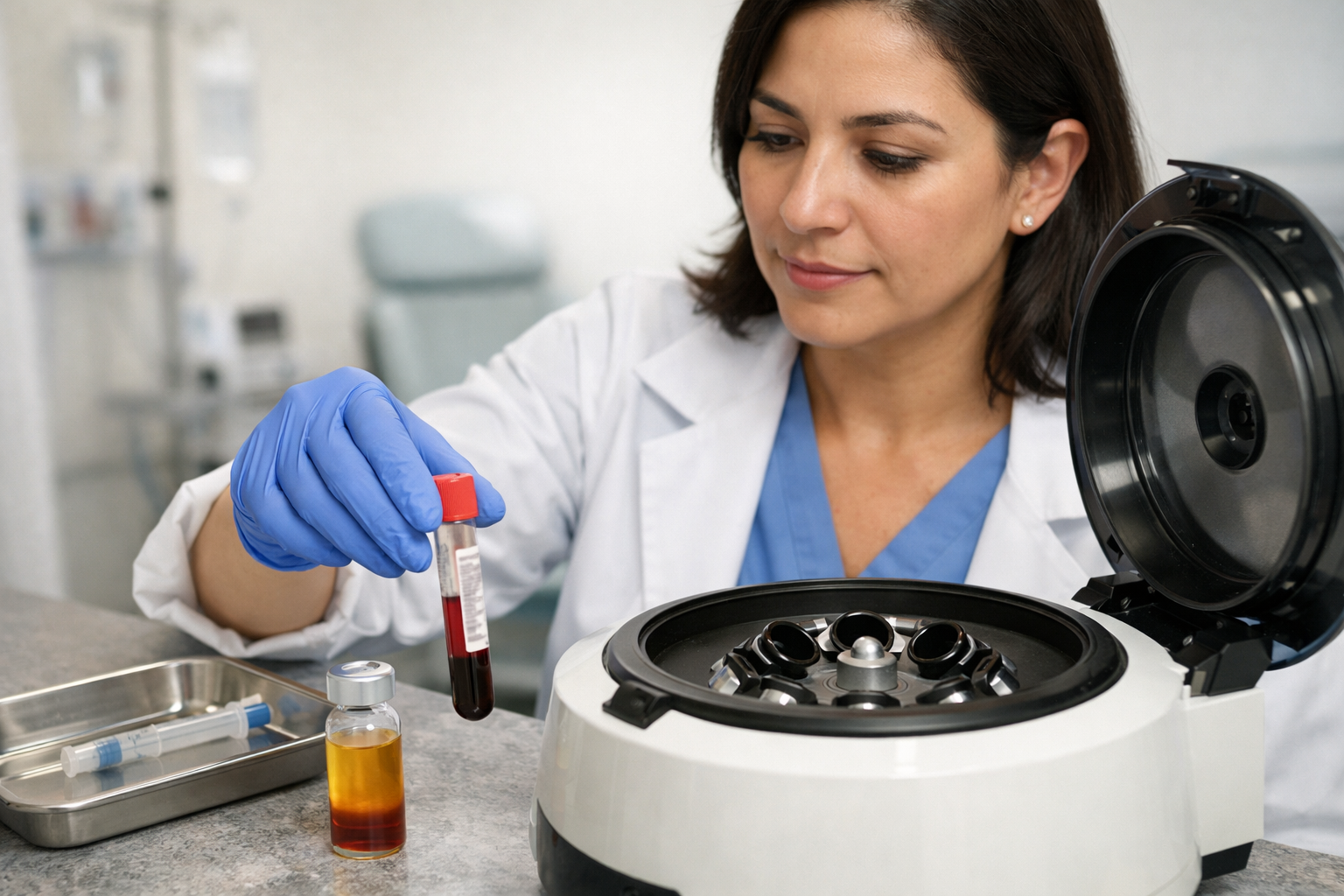
PRP begins with a blood draw. The sample is placed in a centrifuge, which separates components based on density.
The goal is to obtain plasma with a higher relative platelet concentration. In practice, PRP preparations vary. Different systems, spin times, and protocols can produce different platelet concentrations and compositions.
Why technique differences can change the experience and the outcome
Technique matters in two ways:
- Experience: comfort, needle technique, and the provider’s familiarity with the procedure.
- Outcome: how PRP is prepared, how it’s injected, and whether the plan is appropriate for your candidacy.
A patient evaluating the P-Shot should ask how PRP is prepared, what protocol is used, and what the provider considers a realistic response.
What “activation” means and why you may hear conflicting opinions
Some protocols include “activation,” meaning PRP is mixed with an agent intended to trigger platelet release of growth factors.
There are differing opinions and protocols. You don’t need to adjudicate the science yourself, but you should be told what your clinic does and why.
What a real appointment looks like from start to finish
Privacy, consent, and what should be explained before treatment
A professional setting should feel discreet and medically structured.
Before anything happens, you should understand:
- what the procedure includes
- what it’s intended to help
- what it likely won’t change
- risks and side effects
- aftercare and follow-up
Numbing options and comfort expectations
Most clinics use topical numbing and/or local anesthetic. Comfort varies by individual sensitivity. You should expect the clinic to discuss pain control as part of the plan—not as an afterthought.
How injections are typically performed
Clinics typically inject PRP into specific areas based on a set protocol.
The important point is not memorizing anatomy; it’s ensuring the procedure is performed by a trained medical professional in a sterile environment with a documented protocol.
What you’ll feel during and right after
Most men report pressure and brief discomfort rather than severe pain, especially when numbing is used.
Afterward, it’s common to experience mild swelling, tenderness, or bruising.
Aftercare basics and what to avoid in the first few days
Aftercare varies by clinic, but typically includes:
- keeping the area clean
- avoiding certain activities for a short period
- monitoring for any unusual symptoms
You should receive written instructions and a clear point of contact.
Candidacy: who might be a reasonable fit
When PRP is most often explored
Men most commonly explore PRP when they have mild-to-moderate concerns and want to see if a biologic approach provides benefit—especially when they prefer not to rely exclusively on medication.
The health factors that matter more than most people realize
Erectile function is strongly tied to:
- vascular health
- blood pressure
- blood sugar control
- sleep quality
- stress and anxiety
- testosterone and other hormonal factors
If those drivers aren’t addressed, PRP may be limited regardless of technique.
Who should pause, avoid, or get cleared by a specialist first
Men should pause and seek medical guidance first if they have:
- significant cardiovascular disease
- uncontrolled diabetes
- known bleeding disorders or anticoagulant therapy that complicates injections
- active infection or skin issues in the treatment area
- unexplained symptoms that need evaluation
A responsible clinic should screen for these factors.
Setting expectations without hype
What “results” usually means in this context
“Results” in PRP-based male performance treatments are often described as:
- improved erection quality or firmness
- improved confidence (sometimes tied to less performance anxiety)
- subtle changes in sensation for some men
These are not guaranteed. And they’re not always dramatic.
Timing: what changes might show up early vs later
Some men report early changes that may be related to placebo effect, hydration, or reduced anxiety after taking action.
If PRP is going to help physiologically, changes are generally expected to be gradual—not instantaneous.
How many sessions people commonly consider
Some clinics recommend a series rather than a single visit. If a series is recommended, you should be told why, how sessions are spaced, and what outcome would justify continuing.
Maintenance and how long benefits may last for some men
If benefits occur, durability varies. Some men report the effect fades over time, and some consider maintenance based on their response.
A clinic should discuss this as an unknown range rather than a promise.
Why some men feel nothing at all
Lack of response can occur when:
- the underlying cause is vascular or hormonal and untreated
- expectations are too high
- candidacy is poor
- the issue is primarily psychological or relationship-based
It can also happen simply because PRP isn’t a strong enough intervention for your situation.
What the evidence says and what it still doesn’t answer
What studies tend to measure and why that matters
Evidence around PRP for erectile function often relies on subjective questionnaires and small study sizes.
That doesn’t make it meaningless—it means results must be interpreted carefully.
Where the data looks most promising
Some studies suggest potential improvement in mild-to-moderate cases, but findings are not uniformly consistent, and protocols differ.
Where the data is thin, inconsistent, or hard to interpret
Limitations commonly include:
- small participant numbers
- variation in PRP preparation and dosing
- short follow-up periods
- lack of consistent control groups
A trustworthy provider explains these limitations rather than glossing over them.
Why anecdotes spread faster than reliable outcomes
Anecdotes are compelling because they’re personal and immediate. But they aren’t a substitute for evidence, and they often reflect selection bias—people who had a good result talk more than people who didn’t.
Safety and side effects, explained like an adult conversation
What’s common: swelling, bruising, soreness
Common short-term effects can include mild swelling, bruising, tenderness, and soreness at injection sites.
What’s uncommon but important: infection risk and vascular concerns
Any injection carries infection risk. Sterile technique matters.
Because the area is vascular, proper training and careful technique matter. This is not a procedure to bargain-shop.
Red-flag symptoms that should trigger a call the same day
A clinic should tell you what symptoms require prompt medical attention. If that guidance isn’t provided, ask.
The clinic standards that reduce risk
Standards that build trust include:
- documented medical intake
- sterile technique and professional environment
- clear aftercare instructions
- accessible follow-up
Avoiding the “puffy,” numb, or overtreated look
Overfilling vs inflammation: what patients confuse
PRP is not a filler, but temporary swelling can make the area look different early on. Patients sometimes interpret that as a “result.”
A responsible clinic reframes early swelling as expected inflammation, not a final outcome.
Why spacing, dosing, and anatomy matter
If a series is used, spacing should allow the tissue to settle. Overly aggressive dosing or poor technique increases the likelihood of discomfort and dissatisfaction.
When less treatment is actually safer
If your candidacy is borderline or your goals are uncertain, starting conservatively is often safer. You can always do more later. You can’t undo regret easily.
Alternatives and when they make more sense
When lifestyle and cardiovascular health work beats procedures
For many men, improvements in sleep, weight, blood pressure, and exercise make a bigger difference than any procedure.
ED is often a vascular issue. Improving vascular health is not glamorous, but it’s powerful.
Medication options and why they’re still first-line for many men
For many men, PDE5 inhibitors remain first-line because they have better evidence and predictable short-term effect.
This isn’t a sales point. It’s a reality check.
Hormone evaluation and what it can and can’t fix
If testosterone or other hormones are abnormal, correcting them can help. But hormones aren’t the only driver of erections, and normal testosterone doesn’t mean performance concerns aren’t real.
Device-based and procedural options some men consider
Depending on the case, other options may be discussed. The right plan depends on diagnosis.
When combination approaches are discussed and why sequencing matters
Some men explore PRP alongside other options. Sequencing should be diagnosis-driven, not a package.
Questions to bring to a private consult
What to ask about technique, comfort, and sterile protocol
Ask:
- “Who performs the procedure, and what training do they have?”
- “What sterile protocols do you follow?”
- “How do you manage discomfort?”
What to ask about outcomes in patients like you
Ask:
- “Who do you see respond best?”
- “Who do you discourage from doing it?”
- “What would count as a successful outcome for my case?”
What to ask about pricing, number of visits, and follow-up
Ask:
- “Is a series recommended, and why?”
- “What’s included in follow-up?”
- “What happens if I don’t notice a benefit?”
Choosing a clinic in Miami without getting sold to
What “qualified” should mean for this procedure
“Qualified” should mean medical credentials, experience with the procedure, and a clinic that treats it like medical care, not a retail product.
The experience signals that matter more than marketing
Signals that matter:
- thorough intake
- clear discussion of evidence and limitations
- conservative expectations
- professional aftercare
How to spot overpromising language immediately
Be cautious if you hear:
- guaranteed results
- claims that it works for everyone
- promises about size or permanent change
- pressure to buy packages without assessment
If a clinic can’t discuss limitations, it’s not a trustworthy environment.
Next steps if you want a plan, not a pitch
What a responsible evaluation should include
A responsible evaluation should consider:
- your medical history
- cardiovascular risk factors
- medication and supplement review
- hormone considerations
- the specific nature of your performance concern
How to decide whether to try PRP now, later, or not at all
Try PRP now if:
- your situation is mild-to-moderate,
- you’ve been screened appropriately,
- you understand results are not guaranteed,
- and you want a conservative, medically supervised option.
Consider later if:
- you’re in the middle of addressing sleep, stress, or blood pressure,
- you want to see what first-line treatments do first,
- or your schedule doesn’t allow for follow-up.
Consider not at all if:
- you need a guaranteed result,
- your issue is severe and diagnosis-driven treatment is necessary,
- or you’re being pushed toward it without a proper evaluation.
If you want a discreet consultation that prioritizes safety, evidence, and realistic expectations, schedule a private visit.
FAQ
Is the P-Shot the same thing as PRP?
The term “P-Shot” typically refers to a PRP injection protocol used for male sexual wellness. PRP is the substance; the P-Shot is the branded way many clinics describe how they use it.
Does it work for erectile dysfunction?
Evidence is still developing. Some men report improvement, particularly in mild-to-moderate cases, but outcomes are not guaranteed and protocols vary.
How many treatments do people usually need?
Some clinics recommend more than one session. If a series is recommended, you should be told why, how it’s spaced, and what outcome would justify continuing.
Is it painful?
Clinics typically use numbing strategies. Most men describe it as brief discomfort and pressure rather than severe pain. Comfort management should be discussed upfront.
Is it safe?
Any injection has risks. Using your own blood components can reduce certain risks, but sterile technique and proper medical oversight are essential.
How quickly would I notice anything?
If you notice changes, they are typically gradual. Early changes can also be influenced by expectations and anxiety reduction. A clinic should frame timing conservatively.
Who shouldn’t do it?
Men with certain medical conditions or untreated causes of ED should pause and get evaluated first. A reputable clinic will screen and, when appropriate, recommend medical workup.