
From Medication Weight Loss To Sculpted Curves in Miami
From medication weight loss to sculpted curves in Miami
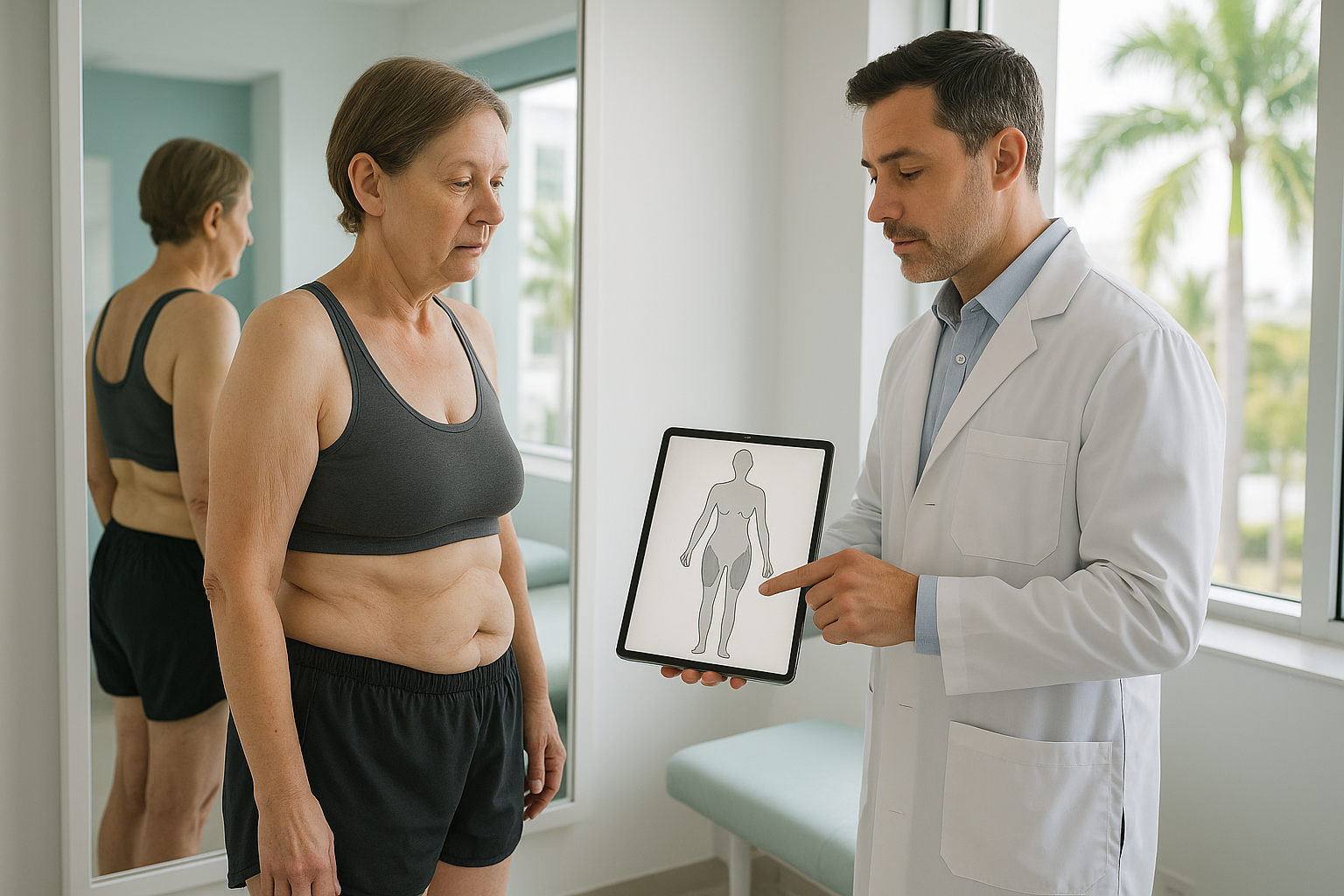
In just a few years, injectable weight loss medicines have changed the look and feel of waiting rooms in Miami. Patients who once struggled for decades with their weight are arriving at consultations twenty or even thirty percent lighter. Their health markers are better, clothes are smaller, but their bodies do not always match how they imagined they would look at a lower weight.
This is where the idea of “Ozempic body” comes in. Surgeons and aesthetic physicians use the term to describe what they see after rapid, medication driven weight loss. The scale is down, yet the torso can look deflated. Skin may hang at the lower abdomen, breasts and buttocks can lose projection, and small pockets of fat cling to the flanks or inner thighs. For some people this is a small tradeoff for better health. For others, especially in a city that lives in swimwear, it becomes a daily concern.
At the same time, national data show a steep forty percent drop in noninvasive fat reduction procedures in twenty twenty four, while liposuction and other surgeries remain strong. Patients who have already done the hard work through medication seem less interested in slow, mild fat freezing and more interested in structural reshaping that can address leftover laxity and contour issues in a single plan.
In that context, body contouring miami practices are using liposuction, laser or radiofrequency assisted tightening, and facial fat transfer to refine proportions after weight has stabilized. Miami has long been a national hub for body aesthetics miami care, including buttock and hip shaping. What is changing now is the number of patients arriving with medication driven weight loss and very specific questions about how to reclaim curves while staying safe.
Throughout this article, we will walk through what rapid GLP 1 weight loss does to fat, muscle, and skin, how liposuction and fat grafting are evolving in response, and how a modern body aesthetics center miami can help patients set realistic goals rather than chase a filtered, celebrity ideal.
Rapid weight loss: what happens to shape, skin, and fat
GLP 1 receptor agonists such as semaglutide and tirzepatide mimic hormones that help the brain feel full sooner and longer. In the STEP 1 trial, adults with obesity who received once weekly semaglutide plus lifestyle counseling lost an average of about fifteen percent of their body weight over sixty eight weeks, while the placebo group lost only a small fraction of that amount. Later work with higher doses has reported average weight loss in the high teens and even above twenty percent in some groups.
From a health perspective, that kind of reduction can improve blood pressure, blood sugar, and markers of cardiovascular risk. From a body composition perspective, the story is more complex. Imaging studies and systematic reviews show that semaglutide and related medicines reduce fat mass substantially, including hard to reach visceral fat, but also reduce lean mass. In other words, people lose mostly fat, which is good, but they also lose some muscle and supportive tissue.
When fat volume drops quickly, the skin does not always have time or capacity to shrink at the same pace. Collagen and elastin fibers that once supported a fuller shape may be stretched and weakened. The result can be:
- Softer, sagging tissue at the lower abdomen
- Folds or overhangs at the waist after the underlying fat has melted
- Deflated breasts or buttocks that feel “emptier” but still sit lower than before
- More visible cellulite where skin no longer has firm support
Surgeons now use the phrase “Ozempic body” to capture this pattern: health gains on the inside paired with loose skin, changed proportions, and stubborn pockets of fat on the outside. For many Miami patients, this is the moment they start looking at structural solutions such as liposuction, facial fat transfer, breast or body lifts, or some combination of all of these.
Liposuction in twenty twenty five: from spot reduction to foundation work
Liposuction has been around for decades, but it remains at the top of cosmetic surgery statistics. In recent reports from the American Society of Plastic Surgeons, liposuction was again among the most common cosmetic surgeries, with steady growth compared with the previous year.
Older ideas about liposuction focused on “spot reduction” taking a stubborn bulge and simply removing fat from that area. Techniques used larger cannulas, and planning sometimes paid less attention to how fat removal would change the surrounding shape. That approach could produce flatter, less natural contours and even new ripples where skin did not contract well.
Modern liposuction in a body aesthetics center works very differently. Surgeons now think of lipo as foundation work. They use smaller cannulas and sculpt in multiple layers, planning around natural shadows, muscle lines, and bony landmarks. The goal is not to hollow out an area but to reveal a smoother, more athletic contour that fits the person’s frame.
In the GLP 1 context, liposuction is rarely used as a weight loss tool. Patients have already done that through prescription medicine and lifestyle. Instead, lipo is used to:
- Smooth leftover bulges at the flanks, upper back, or inner thighs
- Refine a waist that looks boxy or uneven after weight loss
- Shape donor sites for planned
facial fat transfer or body fat grafting
For a patient in a body contouring miami practice, liposuction may be the first stage of a larger plan. Once the underlying foundation is shaped, surgeons can decide whether to add skin tightening, fat grafting, or later external technologies to complete the result.
Laser assisted lipo and internal radiofrequency: what the science says about tighter skin
One of the main worries after rapid weight loss is loose skin. Traditional liposuction removes fat but does not directly tighten the overlying skin, so patients who already have poor elasticity, stretch marks, or long term sun damage are more likely to experience sagging after fat removal.
In response, device makers and surgeons have added energy sources inside the lipo procedure. Two of the best known categories are laser assisted lipolysis and radiofrequency assisted lipolysis.
Laser assisted lipolysis uses a fiber optic laser inside a thin cannula to deliver heat directly to the fat and the undersurface of the skin. Reviews of laser assisted lipo report that it can produce modest improvements in skin tightening, particularly in small areas such as the neck, arms, or lower abdomen, and may reduce bleeding and postoperative pain compared with older techniques, while achieving similar fat removal.
Radiofrequency assisted lipolysis, sometimes branded under names like BodyTite, uses an internal probe paired with an external electrode. Radiofrequency energy passes between them, heating tissue in a controlled band and promoting contraction of collagen fibers. Early studies and case series suggest that this method can produce measurable skin contraction and thicker dermis in treated areas with acceptable safety when used by experienced surgeons.
For patients, this means that an abdominal or arm procedure might include:
- Targeted fat removal with liposuction
- Internal radiofrequency to shrink the “envelope” of skin over that area
- Possibly fewer or shorter scars compared with a full surgical lift in selected cases
It is important to be transparent about the limits. Systematic reviews point out that many energy assisted liposuction studies are small, often industry funded, and focus on short term outcomes. Evidence suggests better tightening than liposuction alone for mild to moderate laxity, but not a replacement for full skin removal when tissue excess is severe.
These technologies also influence laser skin tightening cost. Adding internal laser or radiofrequency can increase operating time and device fees. In exchange, patients may benefit from more tightening with fewer or shorter scars when they are carefully selected. For those with significant hanging tissue after very large weight loss, surgeons still often recommend traditional lifting procedures, sometimes combined with external or internal energy for fine tuning.
In a market like laser skin tightening miami, where patients hear many claims, it is essential that clinics explain what these tools can realistically do and where their limits are.
Fat transfer basics: harvesting, processing, and grafting
If liposuction and energy devices address removal and tightening, facial fat transfer and body fat grafting address volume. The basic idea is simple. Fat is taken from one area where it is relatively abundant, processed, and injected into an area that needs fullness. What makes it powerful and complex is what happens to those cells after they are grafted.
Standard educational materials from plastic surgery societies describe four main stages:
- Harvesting fat with gentle liposuction, often from the abdomen, thighs, or flanks
- Processing the fat to remove blood, oil, and damaged cells through decantation, centrifugation, filtration, or washing
- Injecting tiny threads or droplets of fat into the recipient area, such as the cheeks, temples, breasts, hips, or buttocks
- Allowing time for some of those fat cells to establish a new blood supply and become stable
Research comparing processing methods shows that techniques like careful centrifugation or filtration can improve the proportion of viable fat cells and may improve long term volume retention, although ideal protocols still vary by surgeon and indication.
In the face, facial fat transfer is used to:
- Rebuild midface volume that was lost with age or rapid weight loss
- Soften hollow temples and tear troughs
- Improve jawline transitions and reduce “skeletonized” appearance around the eyes
Trend reports describe growing interest in facial fat transfer miami and other major markets as patients look for natural feeling, longer lasting options that do not require repeated filler sessions every year.
On the body, fat grafting can:
- Restore modest breast volume after weight loss or pregnancy
- Fill hip dips or refine buttock projection
- Smooth contour defects from previous liposuction or trauma
Each of these uses has its own risk profile. Large volume fat transfer to the buttocks carries specific concerns about fat entering large veins and causing fat embolism, especially if injected too deeply. Safety guidelines from professional societies now emphasize injecting only in the subcutaneous plane above the muscle, using blunt cannulas and controlled volumes.
Patients also need to understand
facial fat transfer cost in a realistic way. Because surgery includes both liposuction and grafting, fees reflect operating time, anesthesia, and the complexity of planning. There is no single number that applies to everyone, and final volume can change as some of the grafted fat resorbs over the first months. The reward is that fat which survives long term behaves like the patient’s own tissue and can change naturally with future weight shifts.
Trends driving the rise of facial and body fat grafting
Market research shows that demand for fat grafting is not a fad. One recent report estimated the global facial fat transfer market at roughly two and a half billion dollars in twenty twenty four, with projections that it could more than double by the early twenty thirties as techniques and safety protocols improve.
Several forces are driving this growth:
- Desire for natural texture and movement that matches the rest of the body
- Concerns about repeated synthetic filler injections, especially in patients who need large volumes
- Interest in “recycling” one’s own fat after weight loss in a positive way
The GLP 1 era adds a new factor. Patients who undergo rapid medication assisted weight loss often experience both health improvements and pronounced volume loss in the face and body. For those who once had a naturally curvier figure, losing too much fullness in the buttocks, hips, or breasts can feel unsettling. Fat transfer offers a way to selectively restore some of that softness while keeping the overall weight down.
In Miami, where body aesthetics miami culture has long focused on curves, surgeons are combining lipo sculpting and fat grafting in a single comprehensive session. Rather than chasing extreme shapes, many are now emphasizing balanced proportions that fit the patient’s frame and new weight. This shift aligns well with a more health centered view of aesthetics, where surgery supports confidence in a body that is already medically healthier.
How surgeons combine lipo, internal energy, and fat transfer in real world plans
Inside a body aesthetics center miami, a common approach for a post medication weight loss patient might unfold in three broad stages.
Step one: sculpt and harvest
The surgeon begins with detailed markings that consider how weight loss has reshaped the torso. Common donor areas include the abdomen, flanks, lower back, and outer thighs. Liposuction is used to smooth bulges and carve a more defined waist or hip line.
In selected cases, internal laser or radiofrequency is added in the same session. For example, a surgeon might perform liposuction with radiofrequency assistance along the lower abdomen to encourage better skin contraction, drawing on the evidence discussed earlier. This can be particularly helpful for mild to moderate laxity where a full tummy tuck scar is not desired.
Step two: process and evaluate fat
The harvested fat is then processed. Surgeons may use gentle centrifugation or filtration to concentrate healthy adipocytes and stromal vascular fraction cells. Laboratory and clinical studies indicate that better processing can increase graft survival and reduce oil cysts or nodules.
At this stage, the team evaluates how much viable fat they have for transfer and confirms that the amounts align with safe volume guidelines for each target area.
Step three: targeted fat transfer
The final step is careful reinjection.
- Face:
facial fat transfer can soften hollow cheeks and temples, reduce a gaunt look after significant weight loss, and subtly refresh the lower eyelid region. Here, tiny cannulas and microdroplet techniques are used to protect delicate structures, following protocols from facial fat grafting literature.
- Breasts: Fat grafting can restore upper pole fullness after deflation or support more conservative augmentation without implants.
- Hips and buttocks: In hip dips or upper buttock areas, grafts can round and smooth curves that collapsed during rapid weight loss. Surgeons now emphasize subcutaneous only injections and strict depth control to reduce embolism risk, following updated safety guidelines.
Once incisions have healed and tissue has settled, some practices introduce external technologies. For example, adding radiofrequency based body devices or Evolve style platforms to improve skin quality, further tightening, or muscle tone in surrounding areas. These staged additions can influence overall evolve x treatment cost when they are part of a broader reshaping plan that starts with surgery and continues with noninvasive maintenance.
For patients, this integrated approach at a body aesthetics center can feel less like a single dramatic operation and more like a structured journey. There is a foundation procedure, recovery, reassessment, and then targeted refinements over time.
Recovery timelines, durability, and realistic expectations
Recovery after liposuction and fat transfer is meaningful but manageable for most healthy patients. Clinical resources from surgical societies describe a typical pattern:
- Bruising and swelling at both donor and recipient sites in the first weeks
- Use of compression garments for several weeks to help control swelling and support new contours
- Gradual return to light work within one to two weeks in many cases, depending on extent and occupation
- Progressive improvement in contour over three to six months as swelling resolves and tissues settle
With facial fat transfer, early swelling can be misleading. Many patients look “too full” at first, then see volume soften over weeks as the fraction of fat that will not survive is resorbed. Long term studies show that a portion of grafted fat typically disappears, and what remains after several months tends to be stable.
Once fat establishes a blood supply, it behaves like the rest of the body’s fat. That means it can enlarge with significant weight gain and shrink if the person loses more weight. This is very different from fillers, which gradually break down and require repeat injections regardless of weight stability.
For body procedures, final shape after liposuction and fat transfer is often judged at six months to a year. Patients should be prepared for:
- Temporary numbness or altered sensation
- Small contour irregularities that usually smooth as tissue relaxes and lymphatic flow improves
- The possibility that touch up procedures may be recommended in some cases
Discussing facial fat transfer cost and laser skin tightening cost in this context is more helpful than quoting isolated numbers. The real investment is a combination of surgical fees, time off work, potential follow up treatments, and long term maintenance. A transparent clinic will walk patients through these elements so they can decide whether the likely gains align with their priorities.
Most importantly, expectations need to be anchored in reality. Combination procedures can significantly improve proportions, lift sagging tissue, and restore softer curves, but they cannot create a body that ignores anatomy, genetics, or the natural effects of aging.
Safety, risk reduction, and choosing the right patients
All surgeries carry risk, and that is especially true for procedures that alter both fat volume and skin support. Common risks of liposuction and fat transfer include infection, bleeding, contour irregularities, asymmetry, and scarring. These are well described in educational materials and informed consent documents from plastic surgery societies.
Gluteal fat grafting has drawn specific scrutiny in South Florida after reports of serious complications and deaths from fat embolism. Task forces and professional societies have responded with safety guidelines that recommend:
- Injecting only into the subcutaneous fat layer above the gluteal muscle
- Using larger, blunt cannulas and directing them parallel to the skin, not downward into deeper structures
- Limiting the number of high risk cases performed in a single day
- Preferring accredited surgical facilities with appropriate monitoring and emergency protocols
A responsible body aesthetics center miami will be open about these issues. They will explain how their technique aligns with current guidance, what kind of anesthesia is used, and how patients are monitored after surgery.
For people emerging from medication driven weight loss, timing is another safety factor. Cosmetic surgery groups and bariatric societies generally advise waiting until weight has been stable for several months before major contouring procedures. This window allows:
- Nutritional status to recover, especially protein stores that support healing
- Skin and soft tissue to adapt to the new size
- The medical team to confirm that any obesity related conditions are better controlled
A coordinated body aesthetics center can also connect with the prescribing clinician managing GLP 1 therapy. That conversation may cover whether medication should be continued, tapered, or paused around the time of surgery, and how to minimize the risk of significant weight regain that could affect surgical results.
Not every patient is a good candidate. People with uncontrolled medical conditions, untreated body image disorders, or unrealistic expectations may be better served with continued medical management, counseling, or less invasive options. A careful consultation should feel like a mutual evaluation, not a quick sales pitch.
How to use this information and what to ask in a consultation
Medication assisted weight loss has opened a new chapter in both health and aesthetics. For many Miami residents, GLP 1 therapies deliver life changing reductions in weight and disease risk. At the same time, they can leave behind deflated curves, loose skin, and a body that does not match how a person feels inside.
Liposuction, facial fat transfer, energy assisted tightening, and external technologies can help reshape the silhouette after that weight loss, especially when they are combined thoughtfully. External tools like Evolve style devices add another layer by addressing skin and muscle tone but do not replace surgery where there is major tissue excess or structural change. Their use affects overall planning and can be one factor in evolve x treatment cost when they are incorporated into a staged program.
If you are considering seeing a body contouring miami surgeon or body aesthetics center miami practice, you can use this article as a starting point. Ask questions such as:
- How do you decide between lipo alone and lipo combined with
facial fat transfer miami style procedures
- Do you offer both
facial fat transfer and body fat grafting, and how do you stage them if I need work in multiple areas
- What techniques do you use to process fat, and what does the evidence say about long term survival
- In my case, would internal energy or external devices be appropriate, and how might that influence
laser skin tightening cost and other fees
- What does your team do to reduce risk in higher risk procedures, and how often do you audit your outcomes
Most importantly, remember that this article is educational, not an individual treatment plan. Every person’s anatomy, health status, and goals are different. Decisions about surgery or advanced body aesthetics should be made with a qualified surgeon or medical team who has examined you in person, reviewed your medical history, and taken the time to explain options in clear, honest language.